How Technology Has Improved Modern Dental Crowns
Dental crowns used to involve a fair amount of compromise. A patient would come in with a cracked tooth, a badly worn molar, or a root canal-treated premolar that needed protection. The dentist would prepare the tooth, take a physical impression with a tray full of material, place a temporary crown, send the case to a lab, and hope the final restoration came back with a good fit, acceptable color, and a bite that needed only minor adjustment. Much of that process still exists in some form, but the standard of care has changed dramatically because the technology behind dental crowns has changed.
What has improved is not just speed. That is the part patients notice first, especially when they hear about same-day crowns. The deeper improvements are accuracy, material strength, esthetics, communication between clinic and lab, and the ability to preserve more natural tooth structure than was often possible in the past. Modern dental crowns are better because the entire workflow around them is better.
From putty impressions to digital precision
For many patients, the first obvious change is the move from traditional impressions to intraoral scanning. Conventional impressions can still produce excellent crowns when done carefully, but they are technique-sensitive. Moisture, patient movement, distortion during removal, improper storage, and shipping issues can all affect the final result. A small drag in the impression margin can become a crown that rocks, binds, or leaves a gap at the edge.
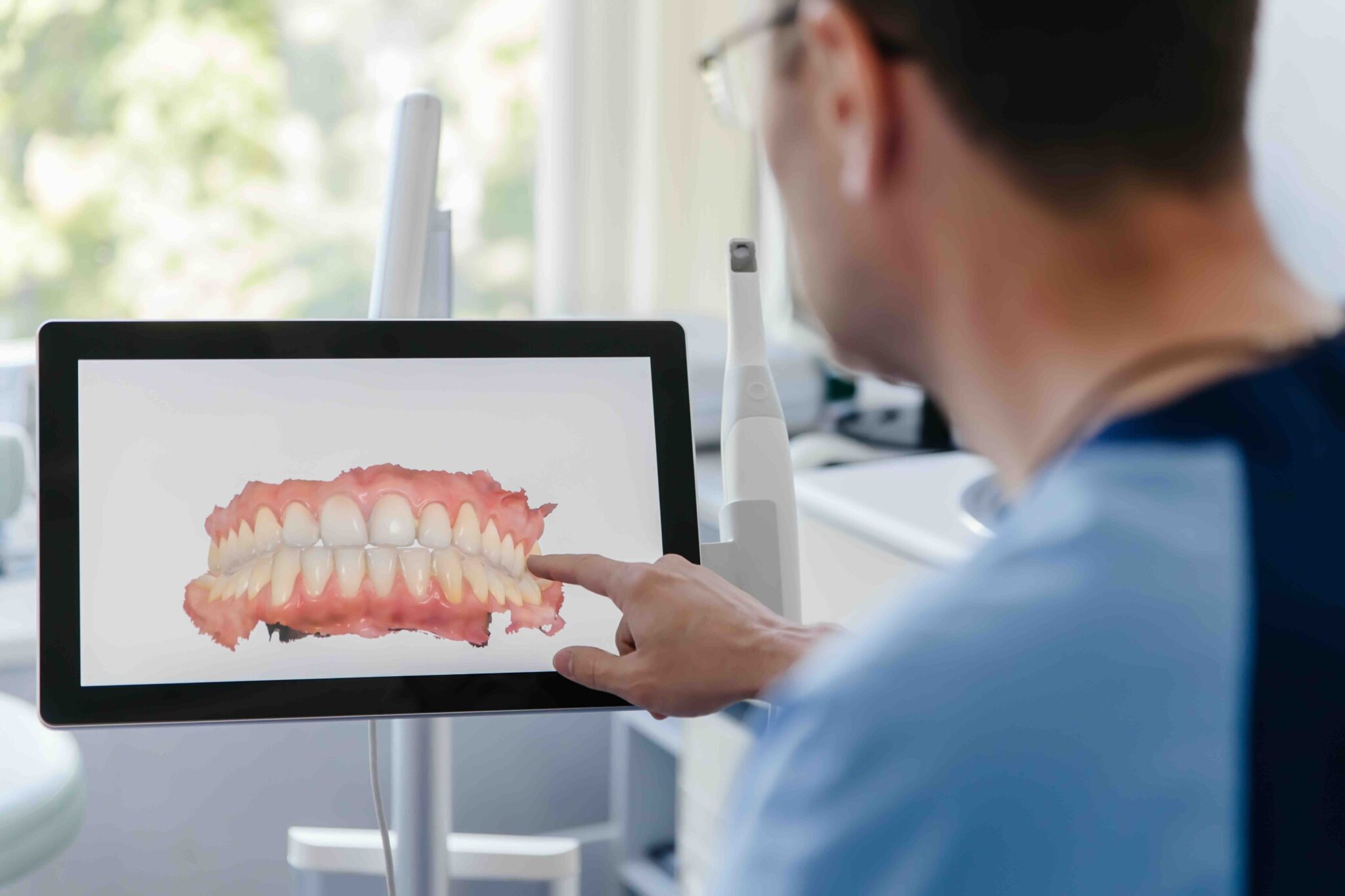
Digital scanners reduce many of those variables. Instead of biting into impression material for several minutes, the patient opens while the clinician captures a three-dimensional model of the tooth and surrounding bite relationship. Modern scanners are fast enough that even anxious patients or those with a strong gag reflex often tolerate them far better than older methods.
The real gain is what happens after the scan. The software can magnify margins, flag missing data, and allow the clinician to rescan a small area immediately rather than repeating an entire impression. If the preparation has a rough edge or a margin hidden by tissue, that problem becomes more obvious on a large monitor. It sounds simple, but that visual feedback changes the quality of work. A crown can only fit as well as the information used to make it.
This also helps in difficult cases. A crown on a short tooth, a tooth with deep decay near the gumline, or one adjacent to crowded teeth leaves less room for error. Digital scanning does not solve poor preparation or uncontrolled bleeding, but it gives the dentist and lab clearer data to work with. That alone has improved many final outcomes.
Better materials have changed what a crown can be
If you ask dentists what has most improved dental crowns over the past two decades, many would point to materials science before anything else. Older crowns often forced a choice between strength and appearance. Full metal crowns were durable but not tooth-colored. Porcelain fused to metal crowns offered better esthetics, but they could show a dark margin over time, and the porcelain layer could chip. All-ceramic options existed, but early generations were not always strong enough for every area of the mouth.
That landscape looks very different now. Zirconia and lithium disilicate have changed everyday crown dentistry.
Zirconia is strong, versatile, and far more esthetic than many patients expect. Earlier zirconia crowns had a reputation for looking somewhat opaque. That was a fair criticism in some cases, especially in front teeth where translucency matters. Newer formulations are more lifelike while still maintaining impressive strength. For back teeth, where chewing forces are high and visibility is lower, zirconia has become a workhorse material.
Lithium disilicate, often used in highly esthetic situations, offers a combination of beauty and good durability. It can mimic enamel better than bulkier, more opaque materials, which makes it useful for visible teeth. When a patient has a single crown on an upper premolar that shows in the smile, material choice matters more than many people realize. A crown that is technically sound but visually flat can stand out every time the person talks.
Technology has also improved how these materials are milled, sintered, stained, glazed, and bonded. The material itself matters, but so does the process used to turn it into a crown. A well-designed zirconia crown from a good digital workflow is a very different product from the earlier ceramic restorations that gave all-tooth-colored crowns a mixed reputation.
The fit at the margin is where the real story lives
Patients often focus on color, shape, and whether the crown feels comfortable. Dentists worry about those things too, but one of the most important details is hidden at the edge where the crown meets the tooth. That margin affects longevity. If the crown does not fit closely, plaque retention increases, cement can wash out over time, and recurrent decay becomes more likely.
This is one area where modern technology has made a quiet but meaningful difference. Digital design software allows for very fine control over spacer settings, contours, contact points, and emergence profile. Milling machines can reproduce those designs with a level of consistency that would have been difficult to match routinely in a fully manual process.
That does not mean every digitally made crown fits perfectly. No technology eliminates the need for clinical judgment. If a tooth is prepared with undercuts, unclear margins, or insufficient reduction, the software will not magically fix it. Still, when the preparation is sound and the scan is accurate, the final crown often seats with fewer surprises.
In practice, this means fewer remakes, less chairside adjustment, and less frustration for everyone involved. It also means less trauma to the patient. There is a noticeable difference between a crown that slides into place with a clean, passive fit and one that requires repeated grinding, pressure, and seat-checking.
Same-day crowns have changed expectations, but not every case should be rushed
Chairside CAD/CAM systems made same-day crowns one of the most visible technological advances in dentistry. The appeal is obvious. A patient with a fractured tooth can come in, have the tooth prepared, scanned, designed, milled, characterized, and cemented in a single visit. That eliminates the temporary crown and the return appointment.
For the right case, this is a genuine improvement. Temporary crowns are useful, but they come with their own risks. They can loosen, break, leak, or shift slightly, which can irritate the gum tissue or alter the fit of the final crown. Patients also appreciate avoiding a second injection, a second block of time away from work, and another trip to the office.
Still, same-day does not automatically mean best-day. Some cases benefit from a skilled lab technician’s layered esthetic work, especially in the front of the mouth where shape, surface texture, and subtle shade transitions matter. Multi-unit cases, complex bite changes, or situations involving gum contouring may require more steps and more planning than a single-visit approach allows.
The best use of technology is not to force every case into the fastest workflow. It is to match the workflow to the clinical problem. For a lower molar with a large fracture, same-day milling can be ideal. For a maxillary central incisor next to a natural tooth with nuanced translucency and internal character, a custom lab-fabricated crown may still produce the superior result.
Digital design has improved function, not just appearance
A crown that looks good but bites incorrectly can become a daily source of irritation. Patients do not always describe this clearly. They may say the tooth feels tall, strange, sore when chewing, or simply wrong. Even a small high spot can lead to sensitivity, muscle tension, and a lingering sense that the restoration never settled in.
Modern software helps dentists and technicians evaluate occlusion more precisely. Digital articulation tools simulate how upper and lower teeth meet. Scanners can capture bite records with increasing accuracy. Some systems allow comparison with the patient’s existing tooth anatomy before preparation, which is particularly useful when replacing a tooth that functioned well before it broke down.
That matters because the natural tooth being replaced often contains useful information. Its grooves, cusps, and contact patterns developed in harmony with the rest of the mouth over years. Reproducing that anatomy, or at least respecting it, gives the new crown a better chance of feeling natural from the start.
This is especially helpful in patients who clench or grind. Those patients place heavy forces on restorations, and poorly designed anatomy can lead to faster wear or fracture. Technology does not remove those risks, but it improves the odds of creating a crown that distributes force more favorably.
Shade matching is more sophisticated than patients realize
Color in dentistry is tricky. Teeth are not one flat shade. They vary by age, hydration, lighting, thickness of enamel, and even by the time of day if the tooth has dehydrated during a long appointment. Matching a front tooth crown used to depend heavily on visual comparison with a shade tab and a written note to the lab. Skilled clinicians and technicians could achieve beautiful work that way, but it required experience and a bit of art.
Now digital photography, shade analysis devices, and improved lab communication have made that process more predictable. High-resolution images let technicians study neighboring teeth in much greater detail. They can see incisal translucency, craze lines, cervical warmth, and the way light reflects off surface texture. This has made a major difference for anterior crowns, where a close color match is not enough if the crown lacks the right depth and vitality.
One practical example comes up often with a single upper front tooth crown. Patients tend to focus on shade number, but the bigger challenge is usually value and texture. A crown can technically be the correct shade family and still look too bright, too dull, or too smooth. Modern technology gives the lab more information, and better information generally leads to better esthetics.
Preservation of tooth structure matters more than many people think
Not all technological improvements are about making stronger crowns. Some of the most important advances help dentists remove less healthy tooth structure in the first place. Adhesive techniques, stronger ceramics, and more precise planning have expanded the range of conservative options. In some cases, what once would have required a full crown can now be restored with a partial-coverage restoration such as an onlay.
That distinction matters because every millimeter of natural tooth preserved can contribute to long-term strength. Teeth weaken as more internal structure is removed. If technology allows a dentist to protect a damaged tooth without cutting it down as aggressively, that is a meaningful benefit.
Even when a full crown is still the best treatment, better planning tools can make preparations more controlled. Reduction guides, digital mockups, and scan-based evaluation help avoid the old problem of either under-preparing or over-preparing. Under-reduction can produce a bulky, overcontoured crown. Over-reduction can bring the pulp at greater risk and sacrifice sound structure unnecessarily.
Labs and clinics communicate better now
One underappreciated reason crowns have improved is the relationship between dentist and lab. In the past, communication might involve a small stone model, a paper slip with a few handwritten notes, and perhaps a shade marking. If the technician had a question, the case might stall. If a detail was missing, assumptions had to be made.
Digital workflows changed that. Files move quickly. Photos, videos, annotated screenshots, and design previews can be shared easily. A technician can request another scan of a specific area the same day. The dentist can review a proposed design before manufacturing. This kind of back-and-forth tends to produce better work because problems are caught earlier.
The best crown cases often look smooth to the patient because much of the refinement happened behind the scenes. Better communication means fewer avoidable surprises when the final restoration arrives.
Where technology has made the biggest difference for patients
For patients, the benefits tend to show up in a few practical ways:
- Appointments are often more comfortable, especially when digital scanning replaces traditional impressions.
- Crowns typically fit more predictably, which can reduce adjustment time and remakes.
- Esthetics are better, particularly for visible teeth where shade and translucency matter.
- Treatment may be faster, with some cases completed in a single visit.
- Material options are broader, so the crown can be matched more closely to the tooth’s location and functional demands.
Those advantages are real, but they still depend on diagnosis and execution. A well-made crown starts long before the scanner comes out. It starts with deciding whether the tooth is restorable, whether the bite is stable, whether the gum tissue is healthy enough to support a clean impression or scan, and whether a crown is even the right treatment.
Not every improvement is visible, and not every new tool is automatically better
There is a temptation in healthcare to assume newer technology always produces better care. Dentistry is not immune to that. In reality, technology improves outcomes when it is used well, and when it solves a real clinical problem.
A mediocre preparation scanned digitally is still a mediocre preparation. A crown milled in-office can still be too tight, too high, or poorly shaped. A beautiful material can still fail if the patient grinds heavily and does not wear a night guard. A state-of-the-art scanner does not replace isolation, soft tissue management, or a thoughtful understanding of occlusion.
There are also trade-offs. Some digital systems require a substantial investment and ongoing updates. Some offices use a hybrid approach because certain impression materials still perform very well in specific circumstances. Some patients prefer the tried-and-true route if their dentist and laboratory have produced excellent results with it for years.
The point is not that traditional methods have become obsolete. It is that technology Dental Crowns has expanded what is possible and improved consistency when used by skilled hands.
The role of imaging and diagnosis
Crowns do not exist in isolation. They are part of a larger diagnostic picture that has also improved with technology. Better radiography, including high-quality digital periapical images and, in selected cases, three-dimensional imaging, helps dentists evaluate cracks, recurrent decay, root anatomy, and surrounding bone levels more clearly before treatment begins.
That matters because many crown failures are not really crown failures. They are diagnostic failures. A tooth may receive a perfectly fabricated crown, yet still develop problems because a vertical crack was missed, the ferrule was inadequate, the core was unstable, or the periodontal support was poor. Better imaging does not eliminate uncertainty, but it improves the odds of choosing the right case for a crown and setting realistic expectations.
Longevity has improved, but maintenance still decides a lot
Patients often ask how long a crown lasts. There is no honest single number. Some crowns fail early due to decay, fracture, bite issues, or endodontic problems. Others last fifteen years or much longer. Technology has improved the average outlook by improving fit, materials, and planning, but longevity still depends heavily on maintenance.
The familiar advice remains true because it works:
- Keep the gumline clean, especially where the crown meets the tooth.
- Do not use crowned teeth to open packaging or bite very hard objects.
- Wear a night guard if you grind or clench.
- Attend regular checkups so small issues can be caught before they become large ones.
What has changed is that modern crowns are often easier to maintain when they are designed well. Proper contours can support healthier gums. Better margins can reduce plaque traps. More precise contacts can make flossing feel more natural rather than awkward or shredding.
Why the human factor still matters most
The most important truth about modern dental crowns is that technology has raised the ceiling, but people still determine the result. A thoughtful dentist, a skilled assistant, a meticulous laboratory technician, and a patient who follows through with care at home, all of those factors matter more than any single machine.
Still, it would be hard to overstate how much progress has been made. Crowns today can be stronger, Dental Crowns more lifelike, more conservative, and more accurate than they were a generation ago. The process can be more comfortable for the patient and more predictable for the clinician. Cases that once involved repeated appointments, messy remakes, or obvious esthetic compromises can now be handled with a level of precision that would have seemed ambitious not long ago.
For patients, that means a restoration that is less likely to feel like a repair and more likely to feel like a natural part of the mouth. For dentists, it means better tools to solve old problems. And for dental crowns as a category of treatment, it means the gap between what is damaged and what can be restored has narrowed in a very practical way.
Simple Dental Vermont
Address: 8914 S Vermont Ave, Los Angeles, CA 90044
Phone number: +13239493000
FAQ About Dental Crowns
How much do crowns cost per tooth?
In the United States, a single dental crown typically costs between $800 and $2,500 per tooth without insurance. The ultimate out-of-pocket price depends heavily on the crown material, the location of the tooth, and whether you have dental insurance coverage.
What is the downside of crowns on teeth?
The primary downside of a dental crown is that the procedure permanently removes natural tooth enamel to shape the tooth for the cap.
Why do dentists push for crowns?
Dentists recommend crowns because a large filling cannot provide enough strength when a tooth loses a major portion of its structure or faces heavy chewing pressure.